What Is Zone 2 Training?
Zone 2 refers to a specific heart rate range where your body is working aerobically—using fat as its primary fuel source while training your cardiovascular system in its most efficient and sustainable state.
Typically around 60–70% of your maximum heart rate, Zone 2 exercise feels steady and controlled: you can hold a conversation, but you're still putting in meaningful effort. It's the zone where endurance is built, metabolic health improves, and long-term performance begins to take root.
This isn't a high-intensity sprint or even a jog that leaves you gasping for air. It's a brisk walk, bike ride, or easy run that feels manageable—maybe even boring—but the benefits are anything but.
Why It Matters: The Foundation of Cardiovascular Health
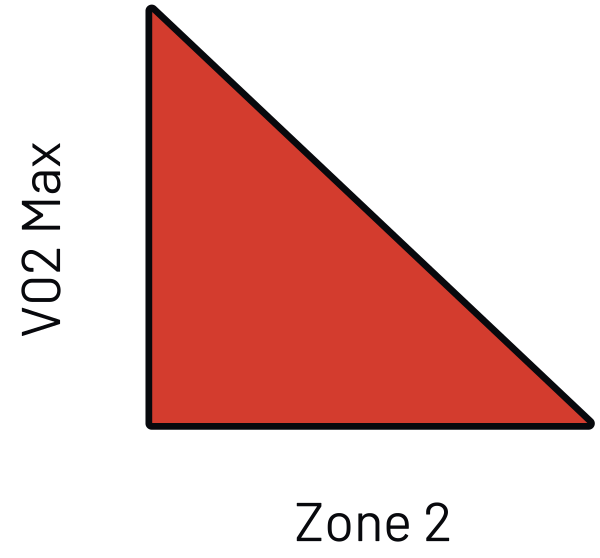
Dr. Peter Attia, a leader in longevity medicine, describes Zone 2 as the foundation of the cardiovascular fitness triangle. Think of your cardiovascular fitness as the area of a triangle:
Zone 2 is the wide, stable base.
VO₂ Max is the peak—your highest aerobic capacity.
The broader your base, the greater the overall area of the triangle—and the stronger your cardiovascular foundation. Zone 2 training doesn't just build endurance. It improves mitochondrial function (how efficiently your cells produce energy), enhances fat metabolism, and supports long-term performance without placing excessive stress on your body.
The 80/20 Principle: Why Most Cardio Should Be Easy
Many leading exercise physiologists and endurance coaches recommend that roughly 80% of your cardiovascular training be performed in Zone 2, with the remaining 20% reserved for higher-intensity efforts.
This approach isn't just for elite athletes. It's a practical, sustainable way to improve cardiovascular fitness while reducing the risk of overtraining.
Whether you're just beginning your fitness journey or returning after years away from structured exercise, the 80/20 approach helps you train consistently while supporting healthy joints, hormones, and recovery.
For a deeper dive into the science, Dr. Iñigo San Millán—one of the leading researchers on Zone 2 metabolism—discusses fat oxidation, mitochondrial health, and longevity with Dr. Peter Attia in one of the field's most well-known conversations.
Why 150 Minutes per Week?
A goal of 150 minutes of Zone 2 exercise each week aligns with recommendations from both the American Heart Association and the World Health Organization.
Here's why that target matters:
It meaningfully improves cardiovascular health, insulin sensitivity, and metabolic function.
It's realistic for most schedules—about 30 minutes five days per week or 50 minutes three days per week.
It's sustainable, making it far more likely to become a lifelong habit rather than a short-term challenge.
Think of it as one of the highest-return investments you can make in your long-term health and performance.
Supporting Research
A large 2022 meta-analysis published in Circulation found that adults performing 150–300 minutes of moderate-intensity exercise per week experienced a 19–25% lower risk of all-cause mortality, along with even greater reductions in cardiovascular disease and cancer-related mortality.
Putting It Into Practice
The challenge isn't knowing that Zone 2 is beneficial—it's knowing whether you're actually training in the right zone.
Because heart rate zones vary from person to person, estimates based solely on age often miss the mark. Measuring your aerobic fitness through testing can provide a much more accurate starting point, helping you determine your personal training zones and monitor progress over time.
Combined with strength training and consistent movement, Zone 2 becomes one of the most effective tools for building long-term health, resilience, and performance.
Stronger for the Long Run
Whether your goal is to improve energy, reduce disease risk, perform better in your favorite sport, or simply stay active for decades to come, Zone 2 training offers one of the most evidence-backed ways to invest in your future health.
The key isn't training harder—it's training smarter and consistently.
Want to Know Your True Zone 2?
At Longevity Lab, we use performance testing like VO₂ Max assessments to identify your personalized training zones, measure cardiovascular fitness, and track improvements over time.
Understanding where your Zone 2 actually begins allows you to train with greater confidence, maximize every workout, and build a stronger foundation for lifelong health. Book an assessment to establish your baseline and start training with precision.